

Introduction
Meta has quietly launched one of its biggest advertising updates in years, a new AI-powered engine called Andromeda. If you run ads on Facebook or Instagram, this update affects you, whether you are a small business owner or an agency managing multiple clients.
In this article, we will explain what Andromeda is, why Meta built it, how ads will behave differently now, and what you must do from this point onwards to stay competitive.
What Is Meta Andromeda?
Andromeda is Meta’s new “retrieval engine.” This is the first and most important stage in ad delivery where Meta decides which ads to consider for a person before ranking and showing them.
In simple words:
Before Andromeda → Meta looked at fewer signals and used older systems to decide which ads might fit a user.
After Andromeda → Meta uses advanced AI models, faster hardware, and deeper creative understanding to choose ads more accurately.
It doesn’t just look at basic interests or audience settings.
It now understands:
- Your creative style
- The type of offer
- Visual elements (colors, objects, layout)
- The intent behind your message
- How people have interacted with similar ads
- Real-time user behavior
This makes ad matching more personalised and dynamic and creative becomes the biggest factor in performance.
Why Meta Built Andromeda
Meta’s old systems struggled because the advertising world changed fast:
1. A Huge Increase in Creative Volume
Businesses now upload more ad creatives than ever due to automation, AI tools, and constant testing. Meta needed a system that could handle millions of variations instantly.
2. User Behaviour Changes Quickly
People scroll fast, their interests shift daily, and attention spans are shorter. Meta needed a smarter engine that could react to user behaviour in real time.
3. Personalisation Needed an Upgrade
People expect relevant ads, not generic ones. Andromeda helps Meta match the right creative to the right person with far more precision than before.
The end result is a system that delivers higher-quality ads, faster decisions, and better performance when advertisers adapt correctly.
What Early Results Show
Early data from Meta, industry analysis and our team’s testing, shows clear improvements after Andromeda:
- Ads are being selected more accurately in the first-stage retrieval
- Ad quality scores have improved
- Relevance has increased
- Some advertisers using Advantage+ tools have reported noticeable ROAS improvements
These aren’t guaranteed results for everyone but they show a direction.
Advertisers who adapt will benefit. Those who don’t will fall behind.
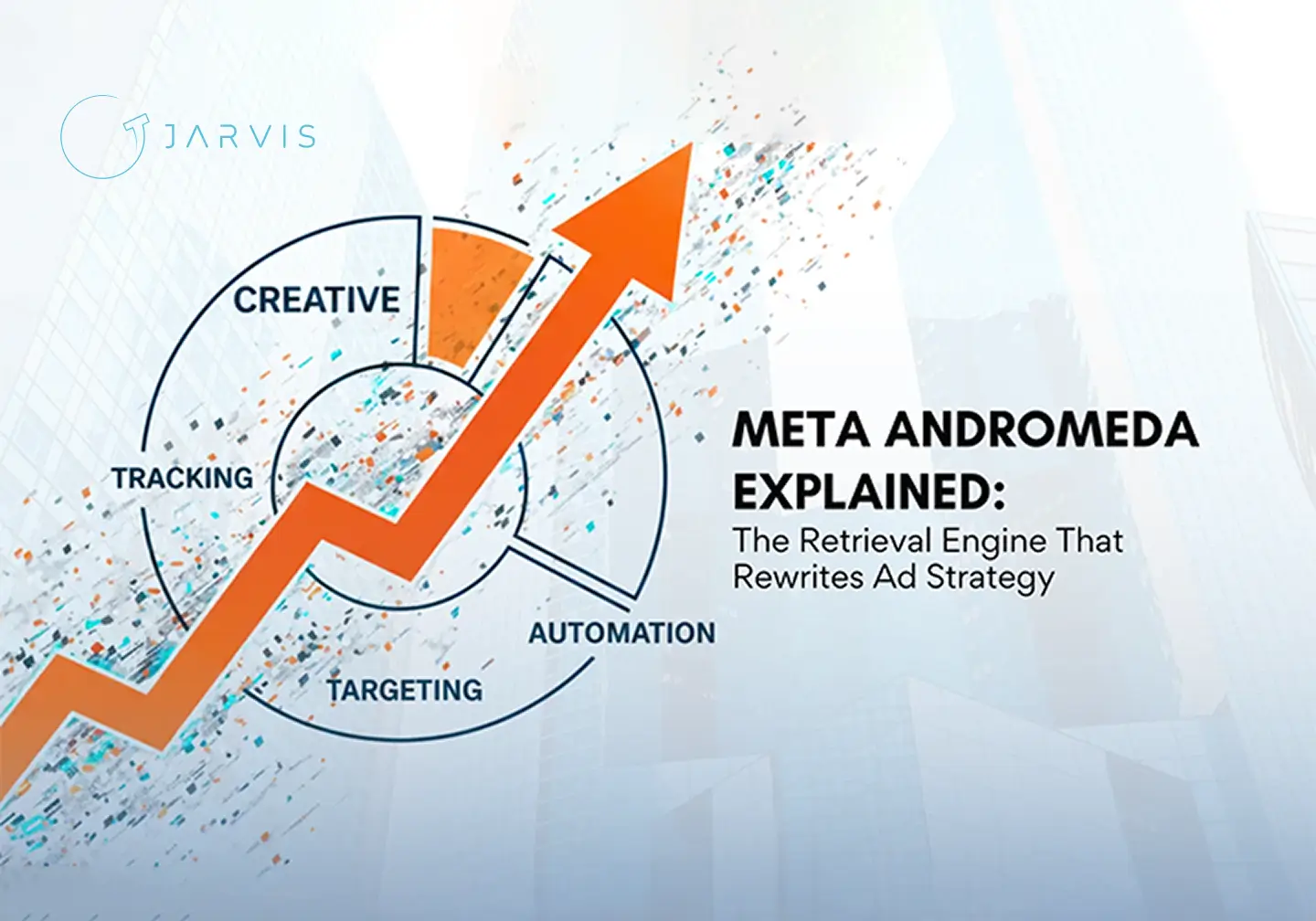
How Andromeda Changes Your Advertising Strategy
1. Creative Matters More Than Targeting
Meta now reads your visuals, hooks, and messaging to decide who should see your ad.
Good creative → reaches the right person
Weak creative → gets ignored by the system
2. Broad Targeting Performs Better
- Meta’s delivery now works best when it has more people to choose from.
- Broad audiences give the AI room to learn, match, and optimise.
- Smaller audiences limit the system and often lead to higher costs.
3. Creative Variety Is Essential
You should not run just 1-2 ads in a campaign.
Andromeda works best when it has:
- Short videos
- Different messages, hooks and angles
- UGC Content
- Multiple formats (video, static, carousel)
More variety = more chances for the system to match the right creative to the right person.
4. Automation Tools Become More Effective
Since Andromeda is a deep-learning system, automation tools like Advantage+ campaigns and dynamic creative often deliver stronger results now because they work hand-in-hand with the new retrieval engine.
5. Data Quality Matters
If your pixel, events, or conversion API setup is weak, the system cannot learn properly.
Good data → better optimisation
Weak or missing data → poor performance
What You Should Do Now
Here’s a simple checklist every advertiser should follow:
1. Build a Strong Creative Library
Create different types of ads, not just small variations.
Include different:
- Visual styles
- Value propositions
- Audiences you speak to
- Formats: reels, static, carousel, testimonials, UGC
2. Use Broad Targeting
Let Meta’s AI do the heavy lifting.
Avoid over-segmentation and unnecessary interest stacks.
3. Use Meta’s Automation Tools
Try Advantage+ Shopping, Advantage+ Audience, and other automated placements.
These tools now work better because Andromeda powers them.
4. Fix Your Tracking System
Make sure:
- Pixel is installed correctly
- Conversion API is working
- Events are optimised and set up properly
- You’re using real signals, not fake or inflated events
5. Refresh Creative Regularly
Do not run one ad for 3 months.
Meta now prioritises freshness, variety, and relevance.
6. Don’t Rush to Edit Campaigns
Because Meta is now using deeper learning, you should give campaigns enough time to stabilise.
Avoid daily changes.
Why This Update Matters
Andromeda isn’t just another update, it’s a structural shift in how Meta’s ad system works.
This is similar to when iOS14 changed tracking, or when Advantage+ changed automation.
But this time, the focus is clear:
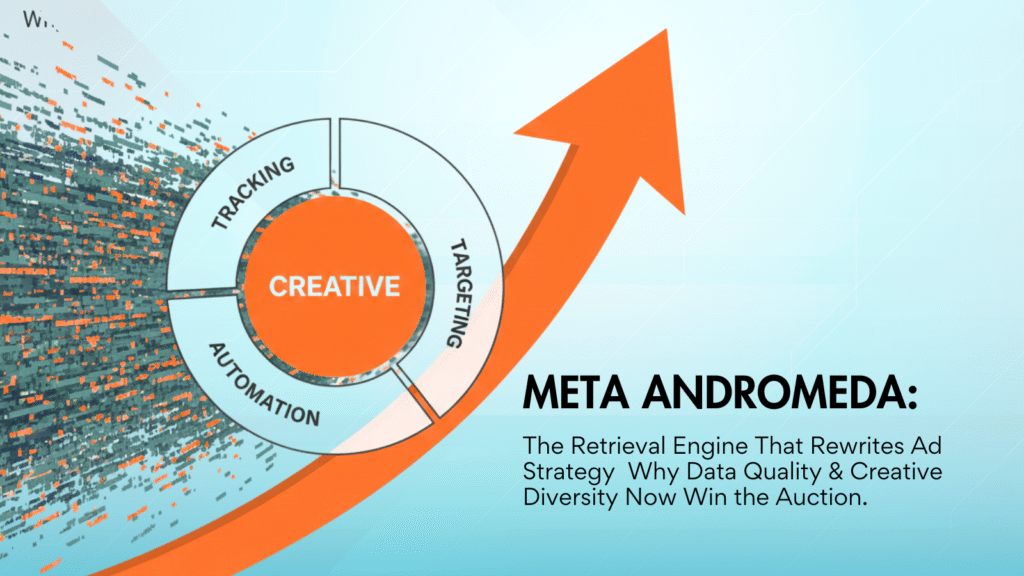
Creative and machine learning are the new foundation of performance.
- Manual targeting matters less
- Creative strategy matters more
- AI and automation will drive most optimisations
- Data quality will decide who wins and who loses
Agencies and businesses that understand this will perform better in 2026 and beyond.
Conclusion:
Meta Andromeda is a major upgrade that changes the entire ecosystem of Facebook and Instagram advertising. It rewards creativity, diversity, automation, and proper data tracking.
If you’re running ads, whether for your own brand or for clients, this is the best time to:
- Rethink your creative strategy
- Test more angles and formats
- Simplify your targeting
- Strengthen tracking
- Use automation tools more confidently
Those who adapt quickly will see better results. Those who continue using old methods may see higher costs and inconsistent performance.
We at Jarvis Technologies will continue sharing updates like this to help businesses stay ahead in the fast-changing digital world.
Found this helpful? Do share it with your fellow marketers who need to read it.